Riley Krüger · 1 November 2026
Link Graph Density Variations as Indicators of Site Migration Completion in Large-Scale Corporate Websites
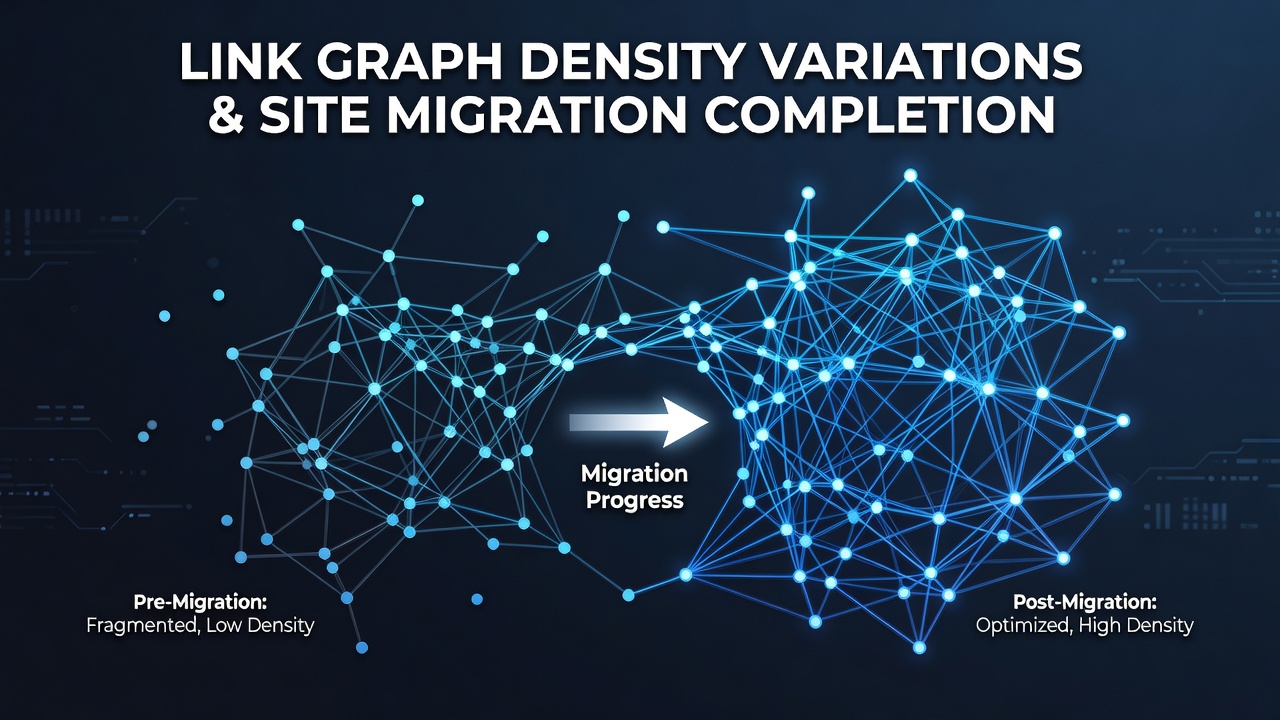
Link graph density refers to the concentration and distribution of connections between pages and domains within a website's overall link structure, and observers note that these patterns shift noticeably during large-scale migrations at corporate sites. Data from network analysis tools shows that density often starts fragmented when redirects activate and content moves across servers, then stabilizes once the new architecture absorbs all legacy pathways. Researchers at institutions like the University of Cambridge have examined similar web graph behaviors in studies of information retrieval, where connectivity metrics reveal transition points without requiring direct access to server logs.
Corporate migrations typically involve thousands of URLs, multiple subdomains, and international versions that must align under new hosting or content management systems. Those who monitor crawl data find that internal link density drops initially because old navigational elements break or redirect temporarily, while external backlinks continue pointing to previous locations until indexation catches up. According to figures from industry reports on digital infrastructure, such projects in multinational organizations can span six to eighteen months, and density measurements provide one objective marker among several for tracking progress.
Understanding Link Graph Metrics in Migration Contexts
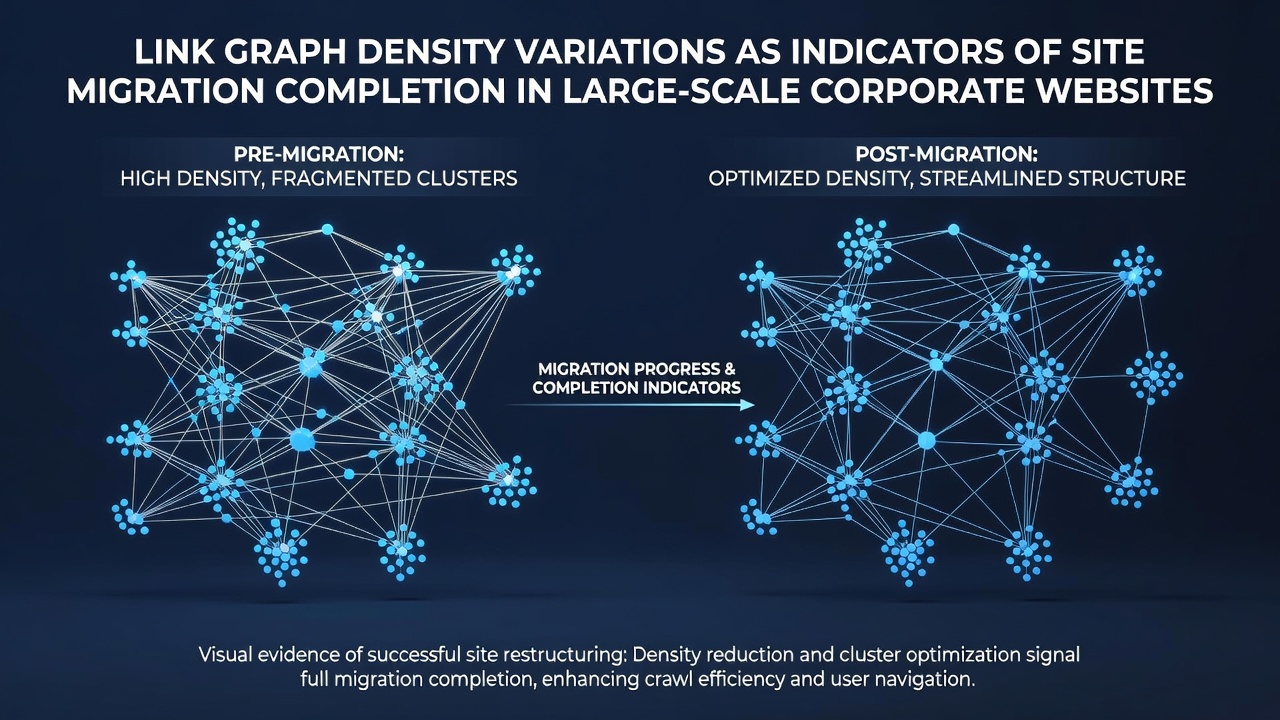
Graph density calculations divide actual links by possible connections within a defined node set, and this ratio fluctuates as pages consolidate or expand during site moves. Experts tracking these changes observe that spikes occur when duplicate content gets canonicalized, concentrating link equity into fewer but stronger nodes, whereas drops signal the presence of orphaned sections still awaiting full redirection chains. Network studies from academic sources such as Stanford InfoLab publications on web structure illustrate how these patterns emerge in large datasets, offering parallels for corporate environments where scale amplifies visibility of the shifts.
External link profiles interact with internal graphs because incoming links influence crawl prioritization, and density variations become more pronounced when legacy domains retain authority during phased cutovers. Data indicates that in November 2026 several enterprise platforms completed migrations where density normalized within four to six weeks after final DNS propagation, coinciding with reduced error rates in webmaster tools. Those analyzing multi-domain setups note that regional versions, such as EU and Asia-Pacific instances, often show staggered density recovery due to differing crawl frequencies across geographies.
Patterns Observed Across Corporate Case Examples
One documented migration at a global manufacturing firm demonstrated initial density reduction in the main product catalog section as content transferred to a new platform, followed by gradual reconnection through updated navigation menus. Observers recorded that backlink clusters from partner sites maintained steady density until the primary domain fully redirected, at which point the graph showed tighter clustering around high-value category pages. Similar patterns appeared in a financial services company's transition, where query string handling changes altered crawl paths and temporarily lowered overall graph cohesion before stabilization.
Industry organizations including the Government of Canada digital services reports have tracked comparable website consolidations in public sector projects, revealing that density metrics align with indexing completeness when combined with server response data. Turns out these indicators prove useful because they capture both internal restructuring and external signal propagation without needing proprietary access. People monitoring such transitions frequently cross-reference density scores against crawl budget utilization, since efficient graphs support faster discovery of updated content.
Factors Influencing Density During Transitions
Redirect implementation plays a central role, as 301 chains that persist beyond initial migration windows can dilute density by spreading link value across intermediate nodes. Content consolidation, such as merging similar product pages, conversely increases local density and creates measurable hubs within the graph. Technical elements like hreflang implementation for international sites and structured data updates also affect how links distribute, particularly when schema changes coincide with platform switches.
External factors including search engine algorithm adjustments and competitor link acquisitions introduce noise into density readings, yet longitudinal tracking helps isolate migration-specific signals. Research indicates that tools capable of exporting graph data at regular intervals allow teams to chart these variations against project timelines, highlighting completion thresholds when fluctuations fall below predefined variance levels. In multi-platform ecosystems, separate density profiles for mobile and desktop versions sometimes converge at different rates, reflecting distinct crawl behaviors.
Conclusion
Link graph density variations supply measurable signals for assessing when large corporate site migrations reach completion, as connectivity patterns shift from fragmented states toward renewed stability. Evidence from network analyses and migration tracking shows that these metrics integrate effectively with other indicators like indexation rates and error log reductions. Organizations applying consistent measurement approaches gain clearer visibility into structural readiness across complex web estates, supporting data-driven decisions on project closure.