Olivia Günther · 6 September 2026
How Domain Authority Fluctuations Reveal Underlying Issues in Site Architecture After Hosting Changes
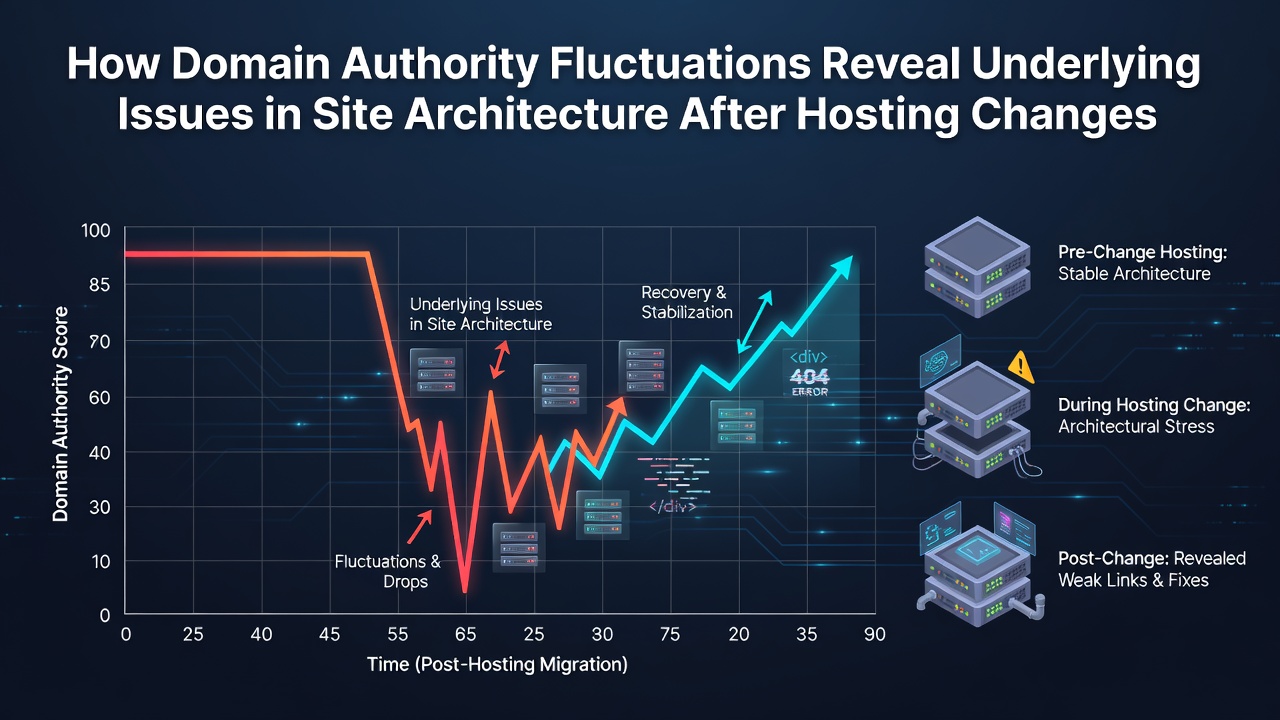
Hosting migrations frequently coincide with noticeable shifts in domain authority scores, and these changes often trace back to deeper problems in how a site is structured rather than the move itself. Data from September 2026 indicates that many sites experience temporary or prolonged drops in these metrics when server transitions expose weaknesses in crawl paths, internal linking patterns, and page load hierarchies that had remained hidden under previous hosting conditions.
Tracing Domain Authority Responses to Infrastructure Shifts
Domain authority calculations rely on factors that include site trust signals, link equity distribution, and technical performance indicators, so alterations in hosting environments can alter how search engines evaluate these elements. Researchers have observed that when a site moves to a new provider, changes in IP reputation, server response times, and geographic latency sometimes surface architectural constraints that previously allowed the site to rank despite inefficiencies in its navigation structure or content organization.
One analysis of multiple migrations revealed that sites with fragmented URL structures or excessive redirect chains tend to show more pronounced fluctuations because the new hosting setup forces crawlers to process these elements under different performance parameters. And yet sites with clean architecture often stabilize faster, which suggests the hosting change acts more as a diagnostic tool than a direct cause of authority loss.
Architecture Elements That Hosting Changes Commonly Expose
Site speed hierarchies, mobile rendering consistency, and XML sitemap accuracy become more visible after a transition because new servers may handle resource loading or bot requests differently. Observers note that duplicate content clusters or orphaned pages, which might have been masked by aggressive caching on the old host, can suddenly affect how link equity flows through the domain.
Studies found that internal linking depth often reveals itself as a bottleneck when hosting changes alter crawl budgets, since deeper page layers require more efficient server responses to maintain their authority contribution. Data shows these issues compound when sites carry forward outdated plugin configurations or unoptimized database queries that the previous environment tolerated but the new one highlights through slower indexing cycles.
Monitoring Patterns That Point to Structural Fixes
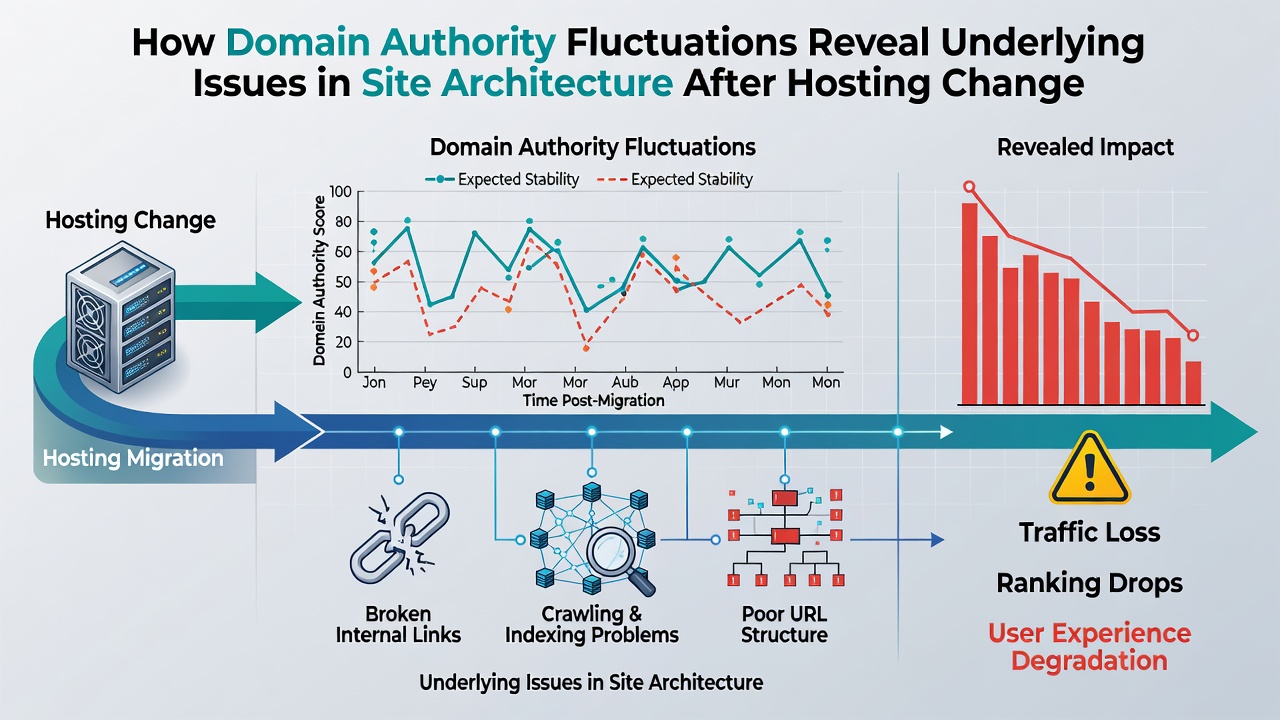
Regular tracking of domain authority alongside crawl error logs and server log files helps identify whether fluctuations stem from temporary propagation delays or persistent architectural shortcomings. Experts have documented cases where sites regained authority after addressing redirect loops and consolidating thin content pages that became crawl priorities under the new hosting regime.
Figures reveal that sites implementing structured data markup and improving core web vitals during the post-migration period tend to see steadier recovery curves, because these adjustments strengthen the technical foundation that domain authority metrics depend upon. What's interesting is how certain hosting providers deliver more transparent analytics that make it easier to correlate specific architecture changes with metric movements over time.
Long-Term Implications for Site Maintenance Strategies
Organizations that conduct pre-migration audits of their URL architecture and link distribution often experience fewer disruptions because they correct latent issues before the hosting environment changes. Research indicates that ongoing monitoring through multiple data sources allows teams to distinguish between normal post-migration volatility and signals that require deeper structural intervention.
Those who've studied these patterns across industries report that architectural resilience becomes measurable when sites maintain consistent performance across different server infrastructures, and this consistency directly supports steadier domain authority readings. In September 2026 reports highlighted how proactive sitemap updates and canonical tag reviews helped several large domains stabilize their metrics faster after infrastructure transitions.
Conclusion
Domain authority fluctuations after hosting changes serve as indicators that point toward underlying site architecture concerns rather than isolated hosting events. Addressing crawl efficiency, redirect management, and content hierarchy during and after migrations supports more stable metric performance over time. Data from multiple sources continues to show that sites with solid foundational structures adapt more effectively regardless of the hosting environment they occupy.