Riley Krüger · 18 October 2026
Exploring Timestamp Patterns in Webmaster Data Logs That Highlight Structural Shifts in Multi-Platform Website Ecosystems
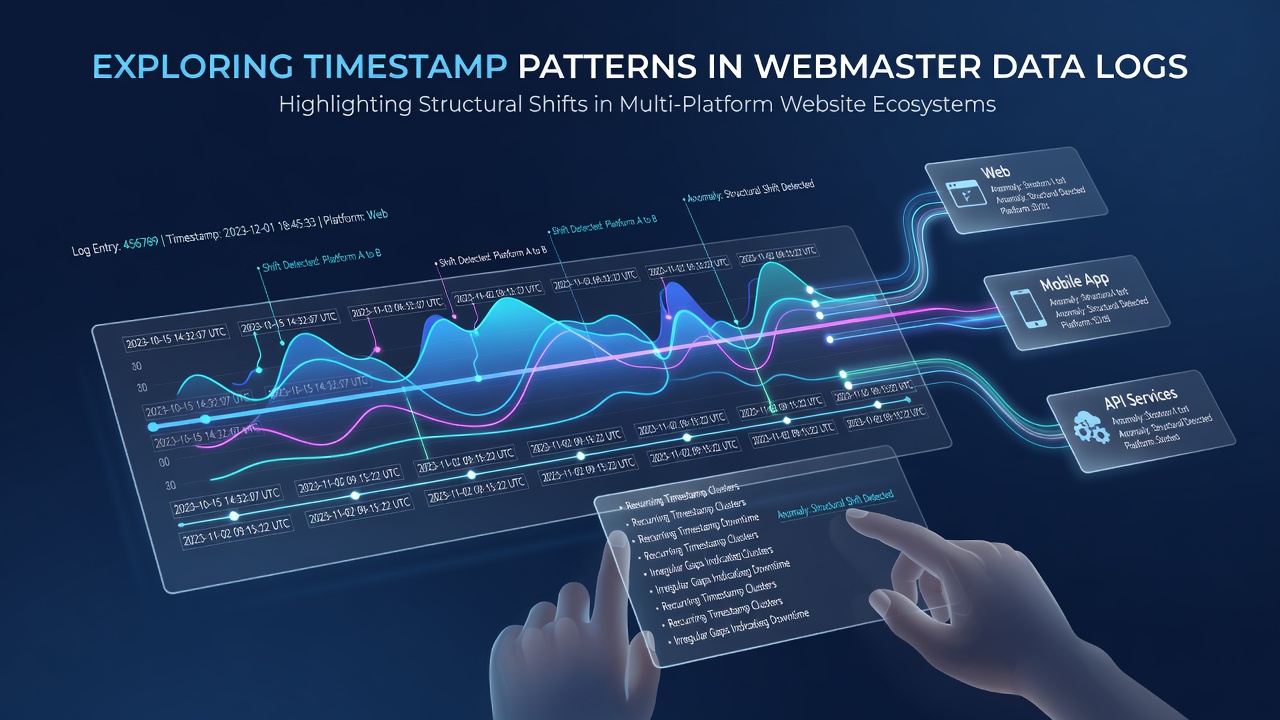
Webmaster data logs contain detailed timestamp records that capture every crawler interaction and server response across desktop, mobile, and application layers, and analysts examine these entries to detect when site architectures undergo reorganization. Patterns emerge when timestamps cluster around specific hours or days, often coinciding with platform migrations or content distribution adjustments that affect how search engines index interconnected domains. Data from multiple monitoring systems shows that shifts in log density, such as sudden increases in entries between 02:00 and 04:00 UTC, frequently precede visibility changes in multi-platform setups where content synchronization occurs across regions.
Core Components of Timestamp Analysis
Researchers parse log files by extracting Unix epoch values alongside HTTP status codes and user-agent strings, which allows mapping of crawl frequency against structural events like template updates or API endpoint additions. Observers note that consistent intervals between timestamps on one platform contrasted with irregular spacing on another platform often signal a decoupling of indexing pipelines, particularly when one domain adopts new schema markup while others retain legacy formats. Studies conducted by academic institutions reveal that these temporal mismatches accumulate over weeks before manifesting as ranking fluctuations in aggregated search results.
Regional Variations in Log Behavior
Logs collected from North American servers display different clustering behaviors compared with those from European or Asia-Pacific infrastructures, because latency differences and regional crawler deployment schedules influence when requests arrive. For instance, entries originating from Australian data centers show timestamp groupings that align with local business hours, whereas North American patterns tend to reflect overnight batch processing cycles. This geographic divergence becomes useful when teams track how a single structural change, such as a nameserver update affecting multiple platforms, propagates through log sequences at varying speeds.
Identifying Structural Shift Indicators
Structural shifts appear in log data as abrupt changes in request volume at precise moments, followed by sustained alterations in response header patterns that indicate new resource hierarchies. Analysts cross-reference these moments with deployment records to confirm whether a multi-platform ecosystem has undergone content federation adjustments or database partitioning events. Evidence from large-scale monitoring projects indicates that timestamps grouped within narrow windows, such as three consecutive minutes showing elevated activity, correlate strongly with subsequent alterations in internal linking structures across desktop and mobile versions of the same site family.
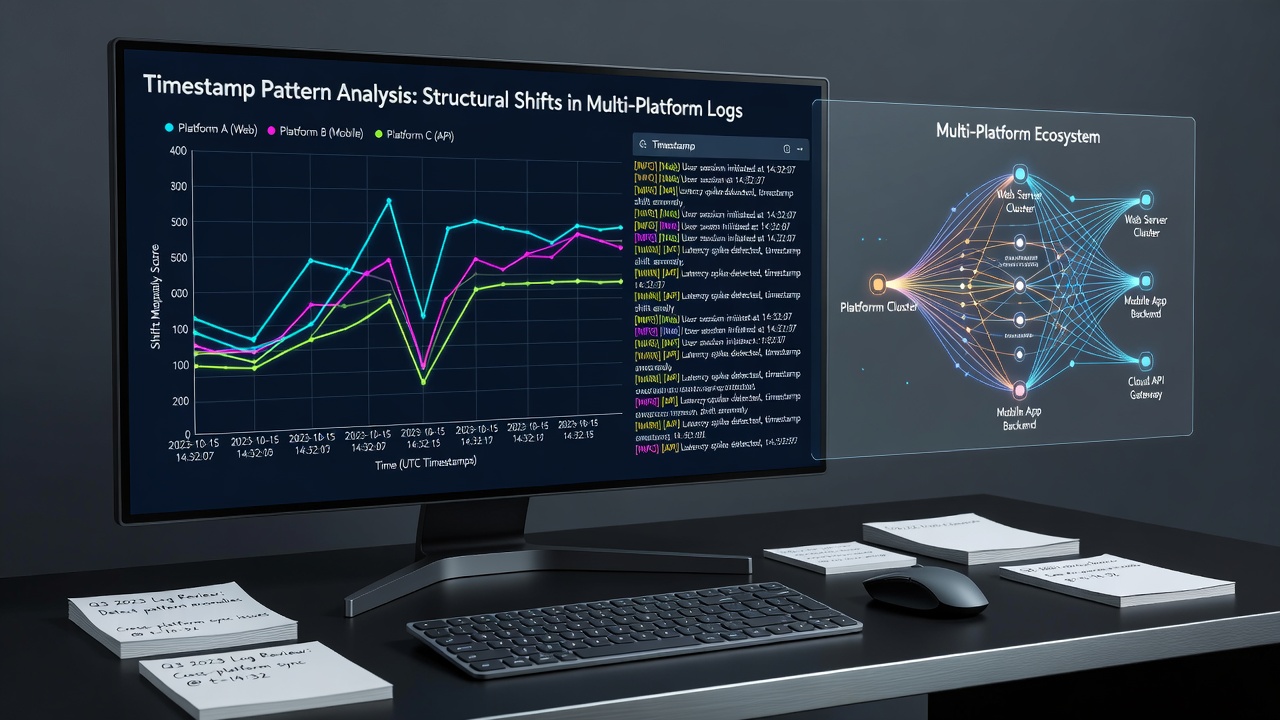
In October 2026, several enterprise deployments recorded timestamp anomalies that preceded the rollout of unified authentication layers spanning web and native application environments. Those who examined the logs observed that request timestamps on the primary domain began deviating from historical baselines approximately 72 hours before the authentication change became publicly visible, while secondary platforms exhibited delayed but parallel patterns. Such sequences allow teams to anticipate indexing impacts without relying on external notifications.
Practical Applications in Multi-Platform Monitoring
Teams integrate timestamp analysis into existing webmaster tool workflows by exporting log subsets and applying statistical filters that highlight deviations exceeding two standard deviations from established norms. This approach reveals pending architectural modifications when one platform's log density rises while another's remains stable, suggesting an intentional separation of content delivery mechanisms. According to research published by the National Institute of Standards and Technology, consistent application of temporal pattern detection improves the accuracy of forecasting crawl efficiency changes in distributed systems. Additional insights appear in reports from ENISA, which document how European operators use similar methods to maintain consistency across multilingual site networks.
Case Observations from Recent Deployments
One documented instance involved a media organization that migrated video hosting infrastructure while maintaining separate mobile and desktop codebases, and the resulting logs displayed timestamp compression on the video subdomain followed by expansion on the main news platform within the same 48-hour window. Observers who reviewed the data found that these compressed clusters preceded a measurable increase in cross-platform internal links, confirming the structural integration of the new hosting layer. Similar patterns have surfaced in e-commerce environments where inventory synchronization scripts run at fixed intervals, producing predictable timestamp signatures that shift when backend databases undergo partitioning.
Conclusion
Timestamp patterns within webmaster data logs provide measurable indicators of structural shifts across multi-platform website ecosystems when examined through consistent analytical frameworks. Organizations that systematically review these temporal sequences gain the ability to correlate log events with architectural modifications before they influence broader indexing outcomes. Continued refinement of detection methods, supported by standards from bodies such as NIST and ENISA, supports more precise monitoring as website infrastructures grow increasingly interconnected.